
Baby teething symptoms can feel overwhelming, especially when your usually calm baby suddenly becomes fussy, clingy, and hard to settle.
You might start questioning everything. Is it a growth spurt? A sleep regression? Is something wrong?
Then you notice the drool. The chewing. The swollen gums. And you realize teething might be starting.
I may earn a commission from purchases made through affiliate links on this site at no additional cost to you
Teething is a normal developmental stage, but that does not make it easy. For many parents, baby teething symptoms bring sleepless nights, emotional babies, and days that feel longer than usual.
Understanding Baby Teething Symptoms
Baby teething symptoms usually begin around 4 to 7 months, although some babies start earlier or later. Every baby is different.
Common baby teething symptoms include:
Excessive drooling
Chewing on hands, toys, or clothing
Swollen or tender gums
Irritability
Trouble sleeping
Mild temperature increase
Loss of appetite
One of the most noticeable baby teething symptoms is constant chewing. Babies are trying to relieve pressure in their gums. That pressure can feel uncomfortable and confusing to them.
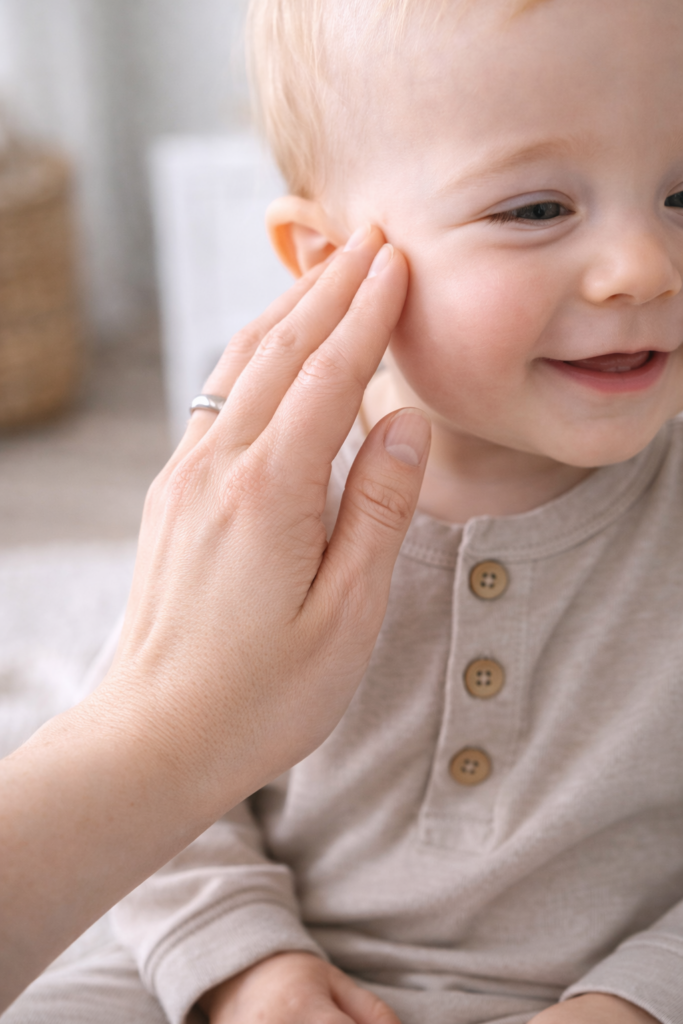
You may also notice your baby pulling at their ears or rubbing their cheeks. This can happen because the gum pain radiates through the jaw area.
What Baby Teething Symptoms Should Not Include
It’s important to know that severe fever, vomiting, or diarrhea are not typical baby teething symptoms.
If your baby develops a high fever or seems unusually lethargic, consult your pediatrician. According to the American Academy of Pediatrics, teething should not cause serious illness.
You can reference HealthyChildren.org from the American Academy of Pediatrics when discussing this for added credibility.
Why Baby Teething Symptoms Feel Worse at Night
Many parents notice that baby teething symptoms intensify at night.
During the day, babies are distracted by activity. At night, there are fewer distractions. The discomfort feels stronger. They also lie down, which can increase the sensation of pressure in the gums.
This is why teething often disrupts sleep temporarily.
Gentle Remedies for Baby Teething Symptoms
You cannot stop teething, but you can reduce discomfort.
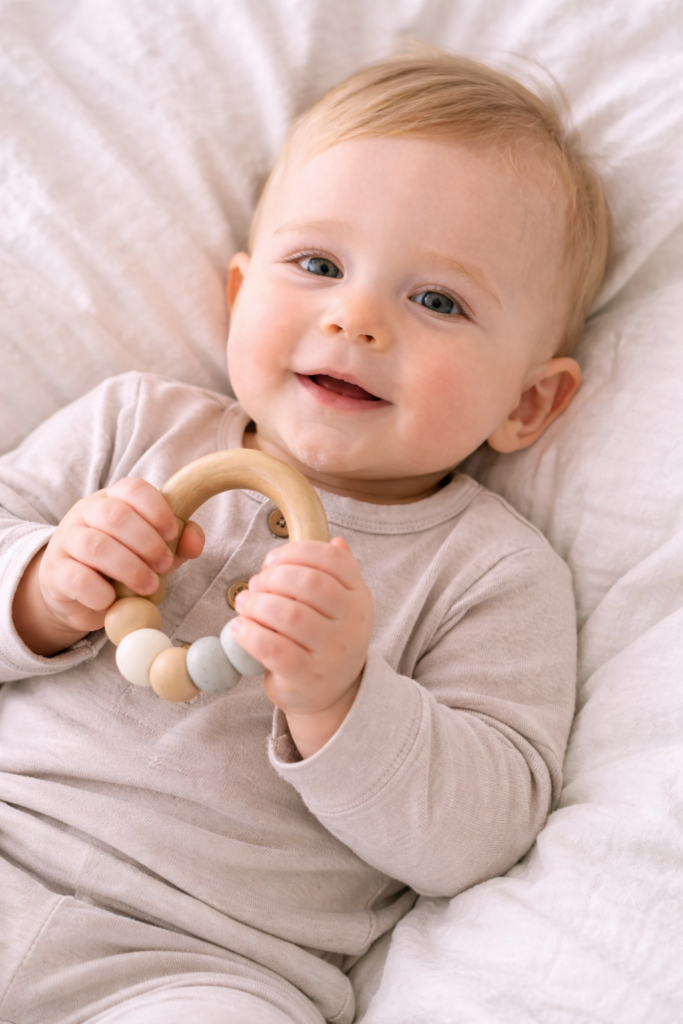
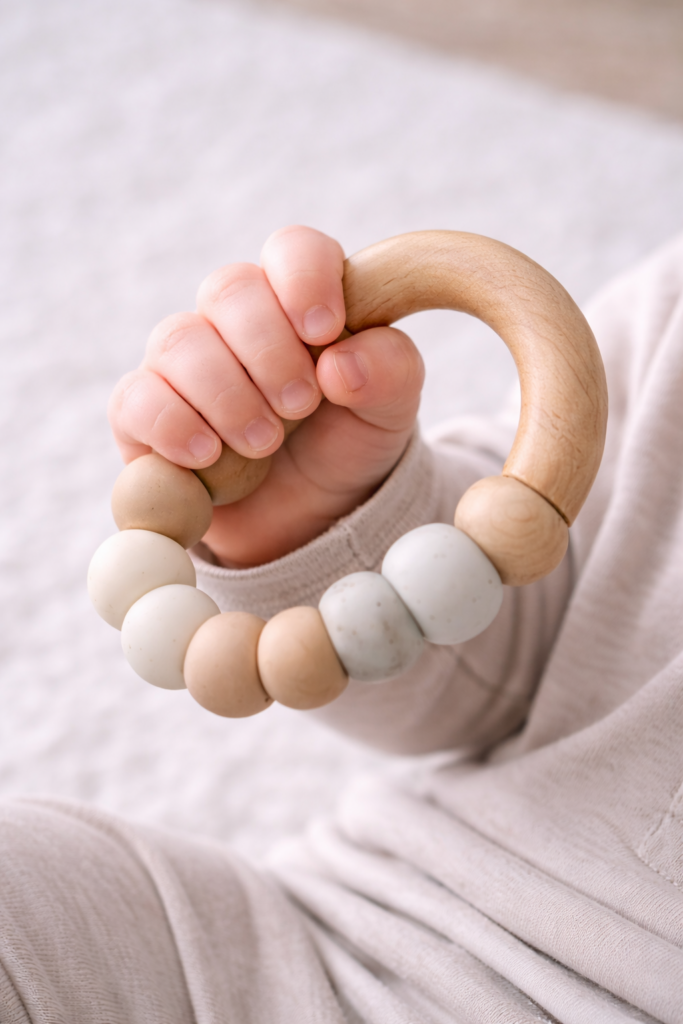
Cold teething toys can help soothe swollen gums. The cool surface reduces inflammation and offers relief. Keep a few options available so you can rotate them throughout the day. Silicone Baby Teething Toys.
A chilled washcloth is another simple solution. Wet a clean cloth, chill it briefly in the refrigerator, and let your baby chew under supervision.

For babies who prefer something softer, a textured Natural Rubber Teether can provide relief while being easy to grip.
If drooling is constant, bibs help protect skin from irritation. Excess moisture around the mouth can cause rashes. Soft, absorbent Organic Baby Bibs can help keep your baby dry.
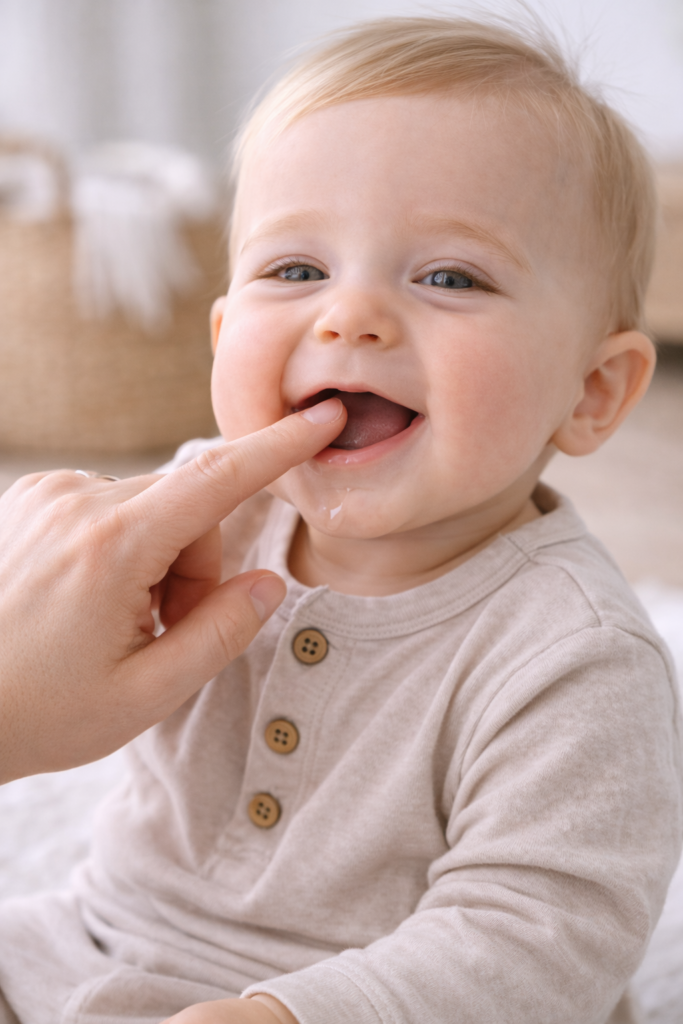
For gum massage, clean hands are essential. You can gently rub your baby’s gums with your finger to ease pressure. Some parents prefer using a soft Baby Gum Massager for added texture and comfort.
Baby Banana – Yellow Banana Toothbrush
Ryan and Rose Cutie PAT Pacifier Stage 2
Nuby 3 Step Soothing Teether Set, BPA Free
Managing Sleep During Teething
When baby teething symptoms affect sleep, focus on comfort rather than strict routines.
Extra cuddles are not creating bad habits. Your baby is uncomfortable. They need reassurance.
You can slightly adjust bedtime by 15–20 minutes earlier if your baby seems overtired. Keeping the room calm and dim can help reduce overstimulation.
If you use a white noise machine, consistency can help maintain familiarity during uncomfortable nights. White Noise Machine for Baby.
How to Support Yourself During Teething Phases
Teething does not only affect babies. It affects parents too.
Interrupted sleep can make you feel overwhelmed quickly. Remind yourself that this stage is temporary.
Lower expectations for productivity. Choose simple meals. Accept help when offered.
Baby teething symptoms usually come in waves. Once a tooth breaks through, you may notice a few calm days before the next one starts.
Signs a Tooth Is About to Break Through
You may see a small white line on the gum. Swelling might peak right before eruption. Sometimes your baby will suddenly feel better once the tooth surfaces.
That visible tooth often explains the days of discomfort that came before it.
When to Call a Doctor
Contact your pediatrician if:
Your baby has a high fever
Symptoms seem severe
Your baby refuses all fluids
You feel unsure about what you’re seeing
Trust your instincts. You know your baby.
Final Thoughts on Baby Teething Symptoms
Baby teething symptoms are uncomfortable, but they are temporary.
Your baby is not being difficult. They are navigating a new physical sensation without understanding it.
Your calm presence, small comforts, and gentle remedies make a difference.
Teething may test your patience. It may disrupt sleep. It may leave you feeling stretched.
But it also signals growth.
And just like every other stage, this one will pass.