
How to Start Decluttering When You Have a Baby

Nobody warns you that a six-pound human will somehow require an entire room’s worth of equipment. Add three sizes of clothing you’re afraid to get rid of “just in case,” plus a drawer of muslin cloths that seem to multiply overnight.
You look around one afternoon, baby finally asleep on your chest, and the mess isn’t even dramatic. It’s just everywhere. Quietly, persistently everywhere.
That’s usually the moment decluttering with a baby stops being a Pinterest project and becomes something closer to survival.
I want to be honest with you before we go any further. This isn’t going to be one of those posts that tells you to pull everything out of your closet in a single afternoon.
If you have a baby, you likely don’t have an afternoon free. You have twenty-minute windows, and some days not even that. So let’s talk about how decluttering with a baby actually works when your hands are full and your brain is running on broken sleep.
Why Decluttering With a Baby Feels So Heavy
Clutter with a newborn or toddler in the house isn’t just physical. It carries an emotional weight too.
Every outgrown outfit reminds you that this stage is already behind you. Every unused baby gadget represents money spent, hope invested, a version of parenthood you thought you’d need.
Letting go of things can feel like letting go of a phase of your child’s life, even when you know logically that isn’t true.
Meanwhile, the sheer volume of baby items multiplies fast. Clothes arrive in five different sizes. Bottles pile up and you’re not sure which ones you still need. Toys from well-meaning relatives light up, sing, and somehow end up under the couch.
It adds up in a way regular household clutter never quite does, because babies grow so fast that “current” and “outgrown” become the same category within weeks.
This is part of why I explore what happens to a woman’s sense of self during this stage in The Truth About Why Mothers Lose Themselves After Birth. Clutter and identity loss tend to show up in the house at the exact same time.
Start Decluttering in the Spaces You Touch Daily
Instead of tackling the whole house, start with the one space you interact with constantly. For most moms, that’s the changing table, the diaper bag, or the kitchen counter where bottles pile up.
Small, high-traffic spaces give you a fast emotional win, and that win matters more than people admit. When you can see the counter again, even for a day, something in your chest loosens slightly.
Set a timer for ten minutes. Not an hour. Ten minutes, done while the baby naps or plays on the floor nearby.
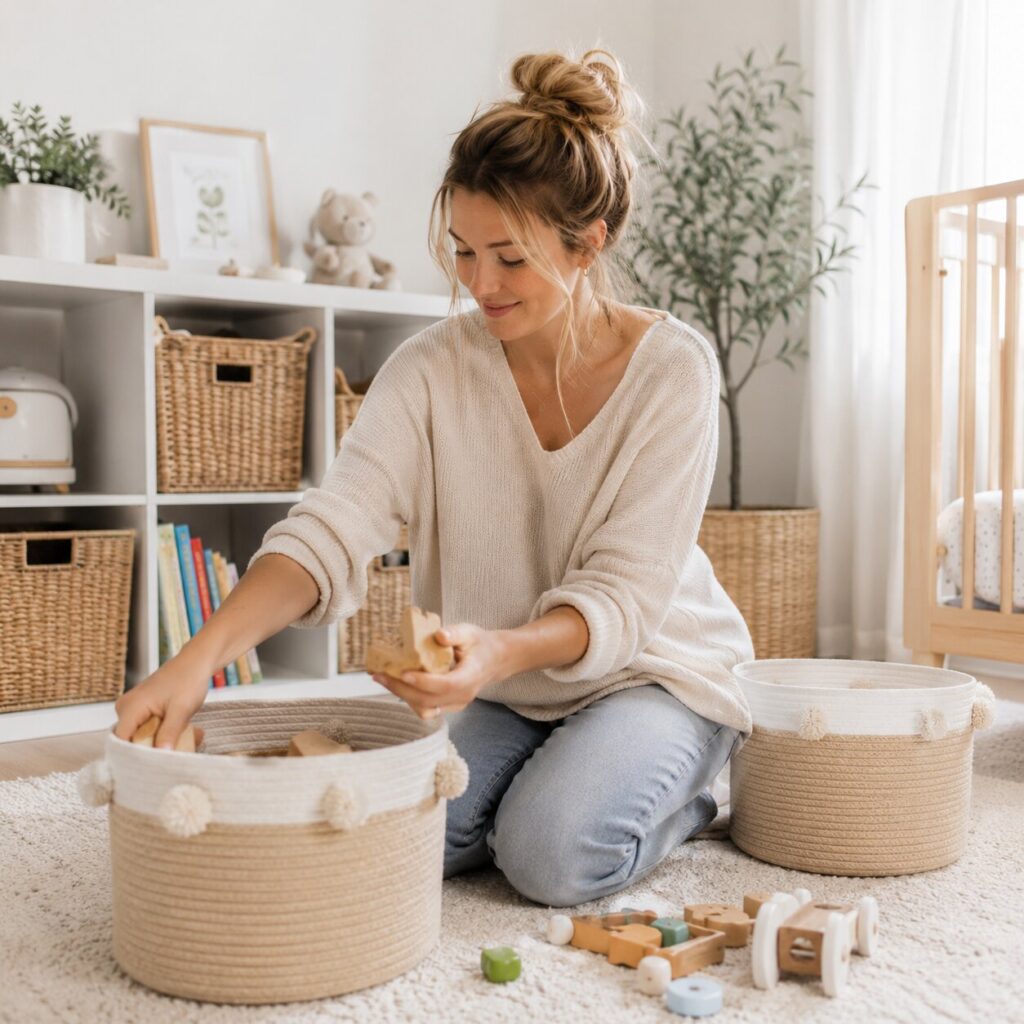
Pull out anything that’s broken, outgrown, or duplicated. Set it near the door in a bag. You aren’t deciding its fate yet, you’re simply moving it out of your daily line of sight, which does more for your mental load than people expect.
The Clothing Question Nobody Wants to Answer
Baby clothes are, without question, the hardest category. They’re small, sentimental, and often barely worn.
Here’s a practical approach that skips the hundred emotional decisions: keep one labeled bin per size. Anything that doesn’t fit in the bin gets donated or passed along. The bin becomes your limit, not your guilt.
If you’re planning for another baby and want to save a few special pieces, that’s completely fair. Just be specific. Save the coming-home outfit, the one from a meaningful photo, the item a grandparent gave.
You don’t need to save all of it to have kept what mattered.
Toys, Gear, and the Guilt of “But It Was Expensive”
This is where a lot of decluttering attempts stall out. You spent money on that bouncer, that swing, that overpriced sleep sack your baby refused to wear more than twice.
Getting rid of it can feel like admitting the money was wasted. It wasn’t. The item served its purpose, even if that purpose was simply helping you survive week six. Its job is done.
If you’re navigating gear decisions for a new baby, revisit what actually got used versus what sat in the box. I cover this in Newborn Baby Must Haves Complete Checklist For First Months. Knowing what’s genuinely essential the second time around makes it much easier to let go of what wasn’t.
Build a System, Not a One-Time Project
Families who stay decluttered aren’t the ones who did one epic purge. They’re the ones who built a small, ongoing habit.
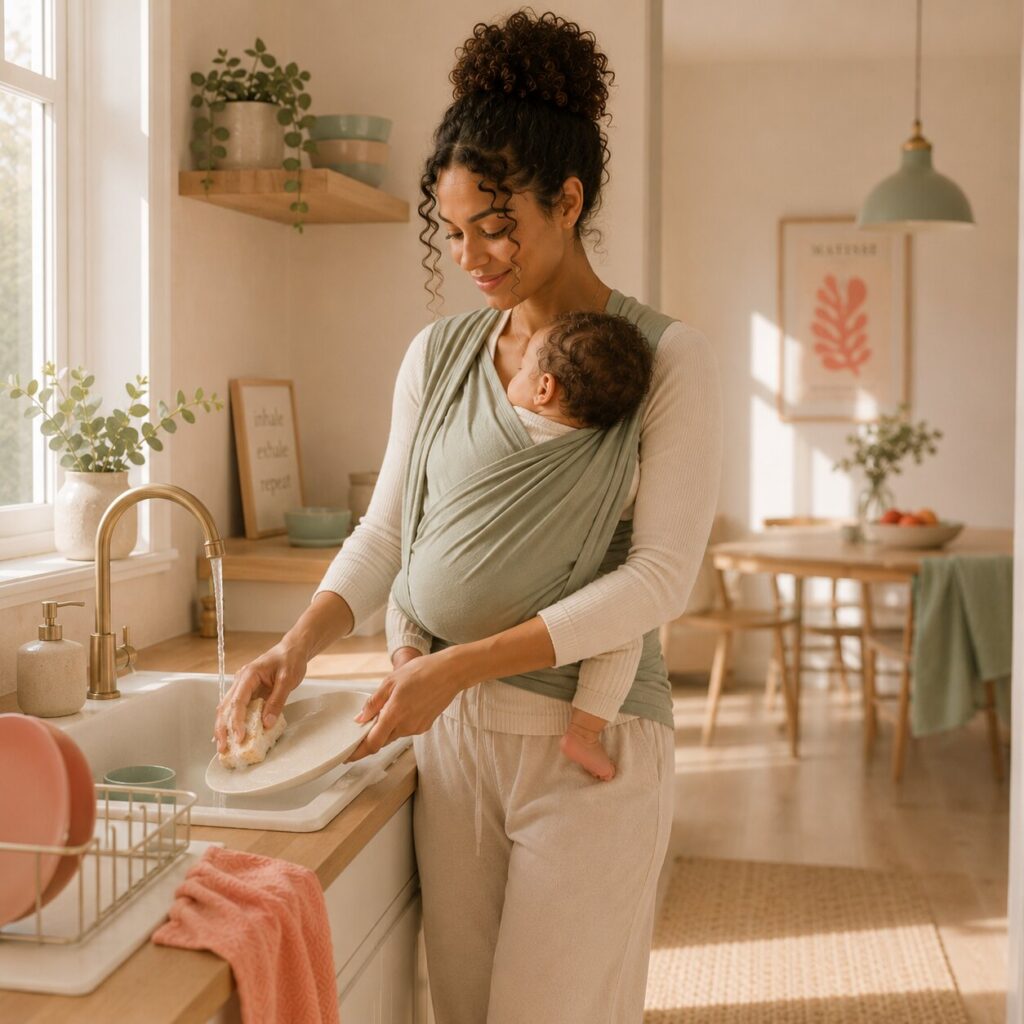
Keep a donation bag in a closet, ready to fill as things are outgrown. Try a five-minute reset before bed instead of a Saturday deep clean. Set a simple rule: one new toy in means one old toy out, especially around birthdays and holidays when the house fills up fast.
However, don’t expect this to feel effortless right away. Some weeks you’ll manage the reset. Other weeks, survival looks like getting everyone fed and into bed, and the toy basket stays a disaster until Thursday.
That’s not failure. That’s just what this season actually looks like. Giving yourself permission to be inconsistent is part of what makes the habit sustainable long term.
When to Let It Go Completely
At some point, you’ll hold an item and feel a strange tug of guilt about letting it go, even though you clearly don’t need it. This is normal, and it’s worth naming instead of pushing past.
Ask yourself one honest question: are you keeping this because it’s useful, or because getting rid of it feels like closing a door? If it’s the second one, give yourself a moment. Then let it go anyway.
The memory doesn’t live in the object. It lives in you.
Final Thoughts on Decluttering With a Baby
If you take nothing else from this, take this: pick one drawer, one shelf, or one bin. Not the whole nursery. Not the whole house. One space.
Give yourself ten minutes and low expectations. Progress with decluttering with a baby isn’t about finishing. It’s about starting small enough that you actually follow through.
Your house will never be perfectly organized while you have a baby in it, and honestly, it isn’t supposed to be. What you’re really building isn’t a spotless home. It’s a little more room to breathe in the one you already have.
