
Baby-Led Weaning Tips I Wish I Knew Before We Started
The first time you hand your baby a piece of soft, steamed sweet potato instead of a spoonful of purée, it feels like a small act of trust that’s much bigger than it looks. You watch them grip it, mash it against their gums, get more of it on the floor than in their mouth.
Some part of you has to actively resist the urge to take over and help. That resistance, more than any recipe, is the real heart of baby-led weaning.
If you’re just starting out, here are the baby-led weaning tips I wish someone had told me clearly before that first messy meal, instead of learning them one overwhelmed dinner at a time.
Understanding What Baby-Led Weaning Actually Is
Baby-led weaning means skipping purées in favor of offering soft, appropriately sized whole foods that your baby feeds themselves from the very start. Instead of spoon-feeding smooth textures, you hand over foods your baby can grip, gum, and explore independently.
The American Academy of Pediatrics notes that babies typically show readiness for solid foods, including baby-led approaches, around six months of age,
once they can sit upright with minimal support and show interest in food.
Readiness matters here more than the calendar date, so watch for those developmental signs rather than starting strictly by the clock.
The Mess Is Not a Sign You’re Doing It Wrong
This is probably the single biggest adjustment for most parents. Baby-led weaning is genuinely, dramatically messy, especially in the first several weeks.
Food ends up in hair, on walls, ground into the high chair tray in ways that seem almost impossible from one small human. This isn’t a sign that something is going wrong
it’s actually part of how babies learn texture, quantity, and self-feeding.
A
Choosing the Right First Foods
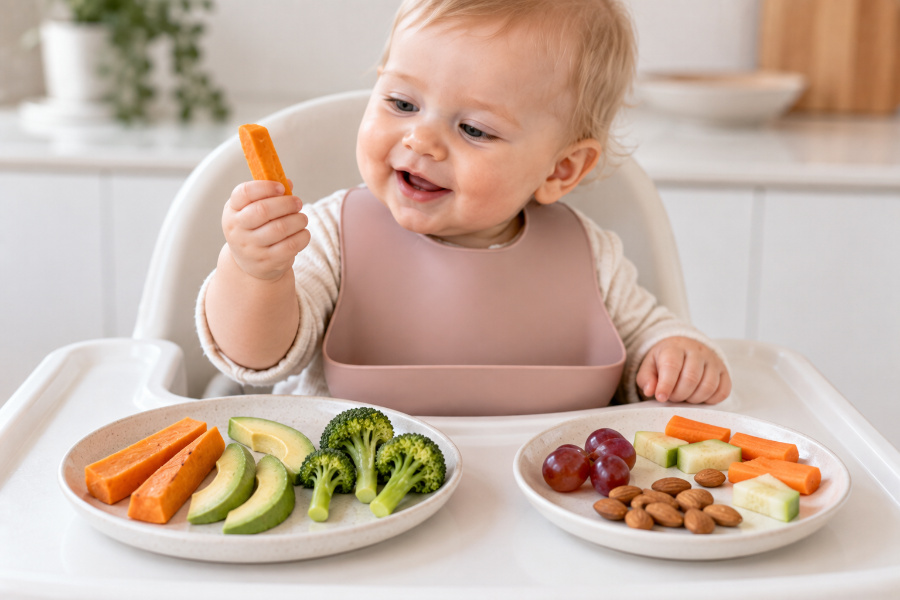
Early foods should be soft enough to mash easily between your fingers, and cut into shapes your baby can grip in their fist, since young babies don’t yet have the fine motor control for a pincer grasp.
Steamed sweet potato spears, ripe avocado slices, and soft-cooked broccoli florets with the stem left on as a handle all work well as early options.

Avoid small, round, or hard foods that pose a choking hazard, including whole grapes, whole nuts, and raw hard vegetables.
If you feel uncertain about food sizing or texture, loop in your pediatrician directly, since guidance can vary slightly based on your baby’s individual development.
Understanding Gagging Versus Choking
This is the fear that keeps a lot of parents from fully committing to baby-led weaning, and it’s worth addressing directly. Gagging is a normal, protective reflex that pushes food forward in the mouth. It looks and sounds alarming, but it’s actually a sign the system works as intended.
Choking, by contrast, is silent, and involves an inability to breathe, cough, or make sound at all.
Taking an infant CPR and choking course before starting solids can ease a significant amount of this anxiety. It gives you concrete steps to fall back on rather than just hoping nothing goes wrong. Most parents find that the fear decreases considerably once they understand the real difference between the two.
Let Them Set the Pace, Even When It’s Slow
One of the harder parts of baby-led weaning is resisting the urge to help too much, especially when a meal takes a long time or most of the food ends up on the floor. Remember that in the early months, food before one is largely about exploration rather than nutrition, since most calories still come from breast milk or formula.
This is why I go deeper into the actual benefits of on-demand feeding in Powerful Benefits Of Breastfeeding On Demand Every Mom Should Know. The two approaches complement each other well during this transitional stage.
Letting your baby set their own pace, even when it means a long, messy meal with little actually eaten, builds genuine confidence and comfort with food over time.
Building a Simple Weekly Rotation
Once your baby tolerates a handful of foods well, building a loose rotation makes meal planning considerably easier. Offer a mix of soft proteins, vegetables, and fruits across the week, repeated a few times before introducing something new.
This helps your baby build both familiarity and variety, without requiring you to plan something entirely new every single day.
If you’re looking for a broader starting list, Baby Led Weaning Must Haves A Guide For New Moms covers the specific gear and food combinations that tend to make this stage go more smoothly.
Final Thoughts on These Baby-Led Weaning Tips
Baby-led weaning asks a lot of trust from a parent, more than most feeding approaches.
You’re trusting your baby’s own instincts around hunger and fullness, trusting that the mess is temporary, and trusting that the slow, chaotic early meals build real skills underneath all that chaos.
It won’t feel graceful for a while. It rarely does. But somewhere around month two or three, you’ll notice your baby handling food with real confidence, and that shift makes the mess along the way feel entirely worth it.